


Choosing a window tint percentage affects how your vehicle looks and how much visible light enters the cabin. The right percentage can also influence privacy, glare, and visibility while driving.
This article explains how window tint percentages work and what to consider when comparing different tint levels.
How to Choose the Best Window Tint Percentage for Your Car
Choosing a tint percentage starts with understanding what the number actually means. With window tint, the percentage generally refers to visible light transmission, commonly called VLT.
Visible light transmission measures how much visible light passes through the glass and film. A higher percentage allows more visible light through, while a lower percentage creates a darker appearance by allowing less light through.
For example, a 50 percent tint allows considerably more visible light through than a 20 percent tint. This makes the 20 percent option appear darker from both inside and outside the vehicle.
The tint percentage describes visible light transmission, so a lower VLT percentage means a darker window.
However, choosing a window tint percentage should involve more than deciding how dark you want the vehicle to look. Visibility, existing factory glass, window location, local regulations, film technology, and driving habits should also be considered.
How Window Tint Percentage Works
Window tint percentages can seem backward at first because a lower percentage means a darker tint. The percentage refers to Visible Light Transmission (VLT), which measures approximately how much visible light passes through the glass and window film. A lower percentage allows less visible light through, while a higher percentage allows more light through.
The final appearance can also depend on the vehicle’s existing glass. Factory glass is not always completely clear, so adding window tint can produce a different total VLT than the percentage listed for the film itself.
Window tint percentage should be considered together with the existing glass because the final VLT can differ from the film rating alone.
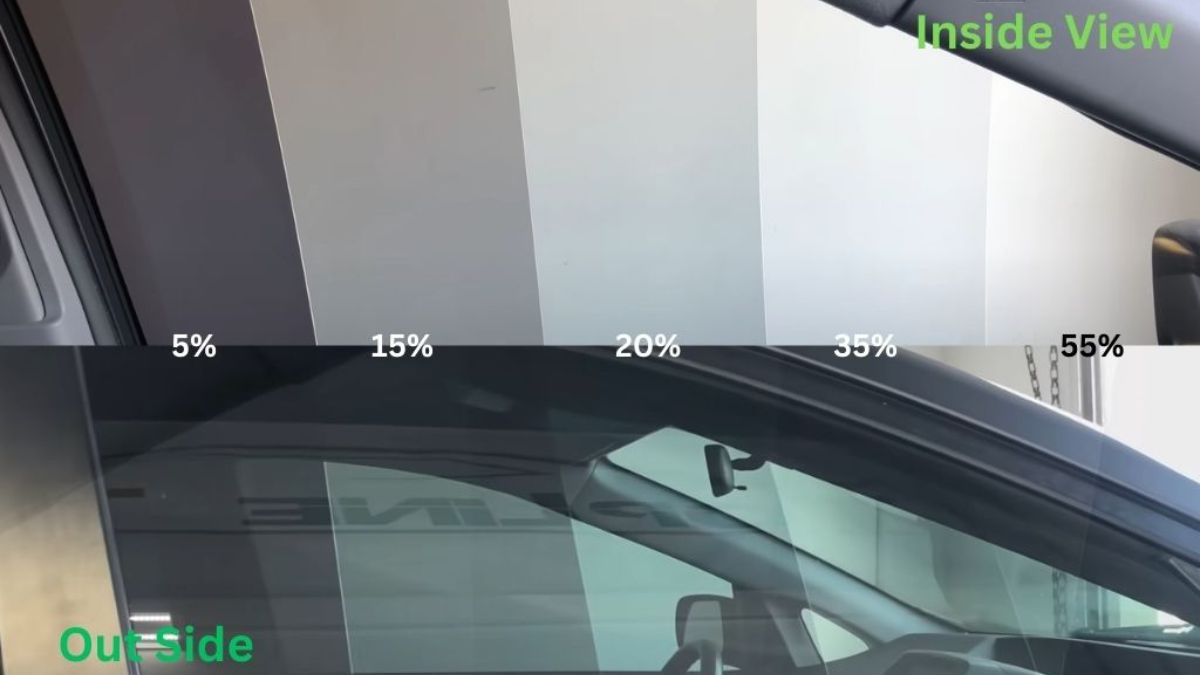
Here is how some of the most common window tint percentages compare:
5% Tint: 5% tint allows approximately 5% of visible light through, making it an extremely dark option. It provides a much darker appearance and significantly reduces the amount of visible light entering through the glass.
15% Tint: 15% tint allows approximately 15% of visible light through and still creates a noticeably dark appearance. It lets in more light than 5% tint while maintaining a high level of visual darkness.
20% Tint: 20% tint allows approximately 20% of visible light through. It remains relatively dark but provides greater visibility through the glass compared with 5% and 15% tint.
35% Tint: 35% tint allows approximately 35% of visible light through, creating a noticeably lighter appearance. It provides a balance between a tinted look and increased visibility through the windows.

55% Tint: 55% tint allows approximately 55% of visible light through and is the lightest of these options. The glass maintains a relatively clear appearance while still having window film applied.
Understanding these percentages makes it easier to compare tint options. As the VLT percentage decreases, the tint becomes darker and allows less visible light through; as the percentage increases, the tint becomes lighter and allows more visible light through.
Does Darker Window Tint Block More Heat?
One common misconception is that the darkest window tint automatically provides the greatest heat rejection. Tint darkness and heat rejection are related to different properties of window film.
VLT primarily describes how much visible light passes through the window. Heat rejection depends more heavily on the technology and construction of the film.
This means a lighter high-performance film may provide strong heat control without creating an extremely dark appearance. Ceramic window tint, for example, is designed around heat rejection and clarity rather than relying only on a dark shade.
Choosing darker film does not automatically mean the vehicle will receive better heat protection.
This distinction is especially useful in hot climates. Drivers can compare film performance and tint percentage separately instead of assuming that maximum darkness is required for a more comfortable interior.
Choosing Tint for the Front Side Windows
The front side windows require careful consideration because the driver regularly looks through them. Tint can reduce bright sunlight and glare, but the selected percentage should still provide suitable visibility during changing driving conditions.
Existing rear privacy glass can also affect the decision. Many vehicles leave the factory with rear windows that appear darker than the front windows. Adding film to the front can create a more consistent appearance, but matching the visual shade does not necessarily mean using the exact same VLT percentage.
The factory glass needs to be considered when determining the finished appearance. A tint meter can be used to measure how much visible light is currently passing through a window.
The best front window tint percentage should account for visibility, existing glass, desired appearance, and applicable tint regulations.
The result should make sense from the driver’s seat rather than being selected based only on how the vehicle looks from outside.
Choosing Tint for Rear Windows
Rear side windows generally serve a different purpose from the windows beside the driver. Depending on the vehicle and applicable regulations, drivers may have more flexibility when selecting a darker appearance for rear areas.
Many SUVs, trucks, and crossovers already have darker factory glass behind the front seats. Although this glass may provide privacy, factory darkened glass and aftermarket window film do not necessarily offer the same performance characteristics.
Adding film can change the final shade while also introducing the performance properties of the selected film. Because the starting glass can already be dark, its existing VLT should be considered before another layer is added.
A full vehicle window tint setup can therefore use different film percentages across different windows rather than applying one identical shade everywhere.
Using different tint percentages across a vehicle can create a more practical result because every window does not have the same visibility requirements.
The goal is to consider each glass area individually while still creating a consistent overall appearance.
How Different Tint Percentages Affect Visibility
Visibility is one of the most important factors when choosing a tint percentage. Darker film reduces the amount of visible light entering through the window, which can change how easily objects are seen through the glass.
During bright daytime conditions, this difference may be less noticeable because plenty of outside light is available. At night or in poorly lit areas, however, darker windows can make the surroundings more difficult to see.
This matters most for windows the driver regularly looks through. The driver and passenger side windows play an important role when checking mirrors, watching for pedestrians, making turns, and observing nearby traffic.
For this reason, front two windows tint should balance the desired appearance with practical visibility from the driver’s position.
A darker tint may provide additional privacy, but maintaining useful visibility should remain an important part of choosing a percentage.
Drivers who frequently travel at night may prefer a different level of darkness than someone whose vehicle is primarily driven during daylight hours.
Choosing a Window Tint Percentage for the Windshield
The windshield requires a different approach because it is the driver’s primary viewing area. Maintaining clear visibility is especially important when considering any type of windshield film.
A lighter film can allow a large amount of visible light through while still providing some of the performance characteristics associated with advanced window film. This makes darkness only one part of the decision.
With windshield tint, glare, heat control, clarity, and legal requirements should all be considered along with VLT.
Windshield tint should prioritize clear driving visibility rather than simply matching the darkness of the side windows.
Night driving is another important consideration. A shade that seems comfortable during bright daylight can feel considerably different on a dark road, making practical visibility an important part of the selection process.
How Sunroof Tint Percentage Can Affect the Cabin
Large sunroofs and panoramic glass roofs introduce sunlight from directly above the cabin. Because of their location and size, they can create different comfort concerns from side windows.
The amount of glass should be considered when selecting film. A large panoramic roof exposes a greater portion of the cabin to overhead sunlight than a smaller traditional sunroof.
Sunroof tint can be selected according to the existing glass, desired light level, film performance, and how frequently the sunroof is left uncovered.
The appropriate sunroof tint percentage depends on how much natural light you want inside the vehicle as well as the performance of the selected film.
Some drivers want to preserve the bright and open feeling of panoramic glass, while others prefer a darker appearance. Comparing these preferences before choosing a percentage can help prevent selecting a film that feels too dark or too light afterward.
How Factory Privacy Glass Changes Tint Percentage
Factory privacy glass is common on the rear sections of SUVs, trucks, and some crossovers. It creates a darker appearance without necessarily using the same type of aftermarket film found on tinted front windows.
This distinction matters when selecting additional tint. Installing a particular film percentage over already darkened glass does not mean the finished window will have that exact VLT.
The existing glass and added film work together to determine how much visible light ultimately passes through. Measuring the glass before selecting film provides a better understanding of the starting point.
Factory privacy glass should be measured rather than judged only by appearance when trying to create a particular finished tint level.
This is also useful when trying to make the front and rear portions of a vehicle look more consistent.
How Window Tint Laws Affect Your Percentage Choice
Window tint laws can place different limits on different areas of a vehicle. Front side windows, rear windows, and windshields may not all follow the same requirements.
Because regulations can change and may depend on the vehicle or window location, drivers should verify current Nevada requirements before choosing a final percentage.
It is also important to remember that legal requirements generally apply to the finished window rather than simply the film by itself. Existing glass can therefore matter when determining the final amount of visible light transmission.
A tint percentage should be selected only after considering the legal VLT requirement for the specific window where the film will be installed.
Choosing based solely on appearance can create problems if the finished glass becomes darker than permitted.
Finding the Right Tint Percentage for Your Vehicle
There is no single window tint percentage that is ideal for every vehicle or driver. A person who drives frequently at night may have different priorities from someone primarily concerned with daytime glare, privacy, or cabin heat.
Window location matters as well. The percentage selected for the windshield does not need to match the front doors, rear doors, or sunroof. Each area can be considered according to how the driver uses it and how much visibility is required.
Film technology should also be evaluated separately from darkness. A lighter premium film may offer the performance a driver wants without requiring extremely dark windows.
The right window tint percentage balances visibility, appearance, film performance, existing glass, driving habits, and legal requirements.
Understanding these factors makes it easier to compare tint percentages based on how they will actually affect the vehicle rather than choosing a shade simply because it looks darker.