

Leather seats can make a vehicle’s interior feel more comfortable and refined, but everyday use can gradually affect their appearance. Spilled drinks, clothing dye, sunlight, and repeated contact can leave marks that become difficult to remove. This is especially noticeable on light-colored leather seats, where stains and discoloration are often easier to see.
Many vehicle owners wonder whether ceramic coating for leather seats can help protect their interiors from these problems. Understanding how interior ceramic coatings work, what they protect against, and their limitations can help you decide whether this type of protection makes sense for your vehicle.
How Interior Ceramic Coating Protects Leather Upholstery
Interior ceramic coating is a protective treatment designed for compatible surfaces inside a vehicle. Unlike exterior ceramic coatings formulated for painted body panels, interior products are developed for materials such as automotive leather, vinyl, plastic, and certain fabrics.
When applied to suitable leather upholstery, the coating creates a thin protective layer that helps reduce the ability of certain liquids and contaminants to bond with the surface. This can make everyday spills and stains easier to address before they become permanent.
Leather ceramic coating helps protect automotive upholstery by adding resistance to certain spills, stains, and surface contamination without significantly changing its original appearance. The level of protection depends on the product, leather construction, application, and maintenance.
Modern automotive ceramic coating products can be formulated for different vehicle surfaces. However, a coating intended for exterior paint should never automatically be considered suitable for leather seats.
Does Ceramic Coating Prevent Stains on Leather Seats?
One of the main reasons drivers consider leather ceramic coating is to help reduce staining. Vehicle seats are frequently exposed to beverages, food residue, skin oils, and other substances that can leave visible marks.
Protective coatings can make certain contaminants less likely to adhere strongly to the surface. This may give you more time to address accidental spills before they become difficult to remove.
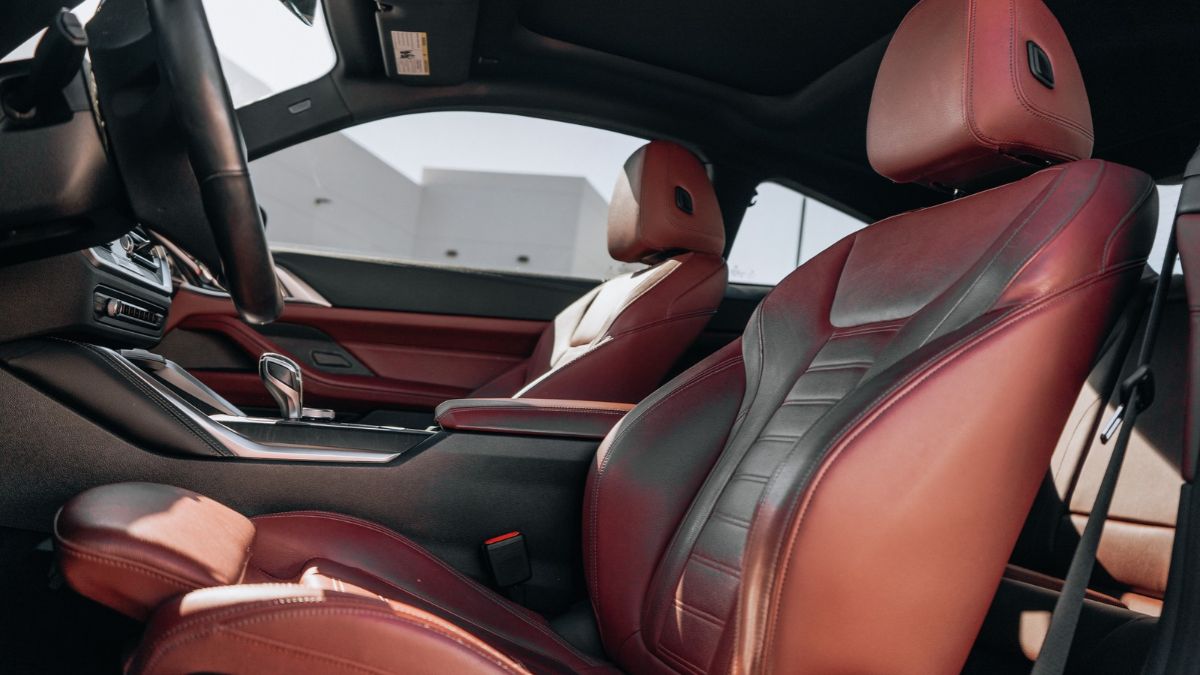
However, stain resistance does not mean complete stain prevention. Some substances can still discolor upholstery, especially when left on the surface for extended periods.
Leather ceramic coating can improve resistance to everyday staining, but it does not make automotive seats completely stain-proof. Prompt attention to spills remains important even when the upholstery has a protective treatment.
A coating’s effectiveness also depends on the type of contaminant. Water-based spills, oils, dyes, and strongly colored liquids may interact differently with treated leather.
Can Ceramic Coating Prevent Dye Transfer From Jeans?
Dye transfer is a common concern for vehicles with white, beige, cream, or light gray leather seats. Dark jeans and other dyed clothing can gradually transfer color onto the upholstery through repeated contact and friction.
This problem is often noticeable on the driver’s seat because the same areas experience frequent contact during entry, exit, and everyday driving. Seat bolsters and lower cushions are particularly exposed.
Leather protection coatings may help reduce how strongly transferred dyes adhere to compatible finished leather surfaces. However, the results depend on the dye, upholstery finish, and coating formulation.
Ceramic coating may help reduce the risk of visible dye transfer on leather seats, but it cannot guarantee that dark clothing will never leave marks. Repeated friction and prolonged exposure can still affect treated upholstery.
Light-colored interiors generally require closer attention because discoloration is more noticeable. Protective treatments can help maintain their appearance, but they do not eliminate the effects of everyday use.
Is Ceramic Coating Safe for All Types of Leather?
Not every automotive leather surface has the same construction or finish. Many modern vehicles use coated leather, where a protective factory finish covers the underlying material.
Other vehicles may feature semi-aniline, aniline, perforated, or specialty leather. These materials can differ in absorbency, texture, breathability, and sensitivity to chemical treatments.
A product suitable for conventional coated leather may not suit every specialty material. Applying an incompatible treatment can affect the appearance or feel of the upholstery.
Apply interior leather ceramic coating only when it’s compatible with the vehicle’s specific upholstery material and factory finish. Manufacturer recommendations are particularly important for premium or specialty leather interiors.
Perforated leather also requires careful application because excess product can collect inside small openings. Vehicles with ventilated seats need special consideration to avoid interfering with the upholstery’s intended operation.
Does Leather Ceramic Coating Change the Color or Texture?
Most interior protection coatings are designed to maintain the original appearance of compatible leather surfaces. This is important because automotive upholstery comes in different colors, textures, and factory finishes.
A properly selected product should not create the same glossy appearance associated with some traditional leather dressings. Many modern interiors feature a matte or satin finish that owners want to preserve.
However, products vary in formulation and final appearance. Some treatments may produce subtle changes in surface feel or sheen, particularly when applied incorrectly.
A suitable leather ceramic coating should preserve the upholstery’s intended appearance rather than create an artificial shine or noticeably alter its texture. Testing and following the product instructions can help identify potential compatibility issues.
This is especially important for vehicles with contrasting leather colors or textured seating surfaces. Maintaining a consistent finish across treated areas contributes to the overall appearance of the interior.
Can Ceramic Coating Protect Leather From Sun Damage?
Sunlight can affect automotive interiors over time, particularly when vehicles spend long periods parked outdoors. Ultraviolet radiation and elevated temperatures can change the appearance and condition of certain upholstery materials.
Some interior protection products include properties intended to help reduce the effects of UV exposure. However, protection levels vary, and not every leather ceramic coating provides the same benefits.
Heat can also influence upholstery independently of ultraviolet radiation. A protective coating does not prevent a parked vehicle’s interior from getting hot.
Some leather protection coatings can help reduce UV-related deterioration, but they cannot eliminate every effect of sunlight, heat, or material aging. The leather’s factory finish and the vehicle’s environment also influence long-term durability.
In sunny locations such as Las Vegas, limiting prolonged solar exposure can be an important part of interior preservation. Automotive window tint can help reduce UV transmission and solar heat entering through treated glass, although performance depends on the film and existing glass.
Does Ceramic Coating Stop Leather Seats From Cracking?
Leather seats can develop cracks or surface deterioration for several reasons. Repeated flexing, friction, aging, temperature changes, and deterioration of the factory finish can all contribute.
Interior ceramic coating is primarily meant to protect the surface against certain contaminants. It is not designed to restore damaged leather or prevent all forms of mechanical wear.
Seat bolsters are especially vulnerable because occupants repeatedly slide across them when entering and exiting the vehicle. Over time, this friction can wear down the surface finish, even with a protective treatment.
A leather ceramic coating does not guarantee protection against cracks, peeling, or physical wear from repeated use. Its main purpose is to improve surface resistance to selected contaminants.
Evaluate existing cracks and peeling areas before applying any coating. Protective treatments cannot repair damaged upholstery or replace the need for appropriate leather restoration.
How Long Does Ceramic Coating Last on Leather Seats?
The lifespan of an interior ceramic coating depends on the product, application conditions, upholstery material, and how frequently the treated surfaces are used.
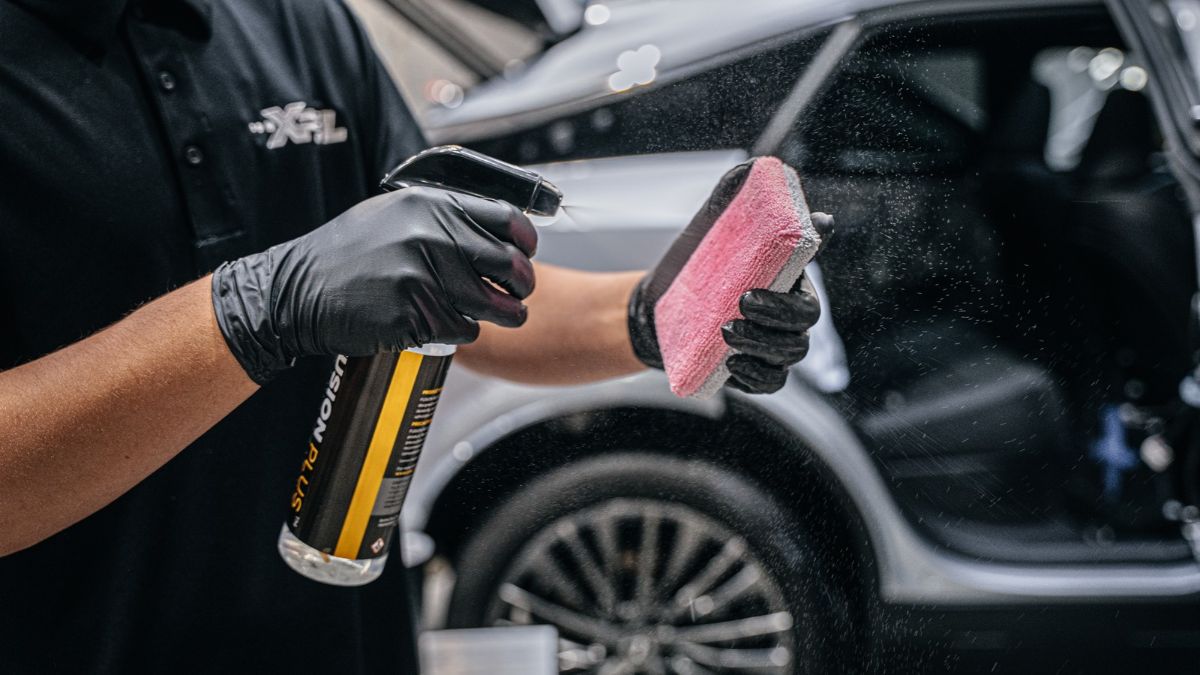
Driver’s seats generally experience more contact than rear seats or other, less-used surfaces. Repeated friction, clothing contact, and regular maintenance can gradually affect the protective layer.
Some products are designed to provide protection for extended periods, but you should understand their advertised durability in the context of the manufacturer’s testing and recommended maintenance.
Leather ceramic coating durability varies with everyday use, so product specifications and actual upholstery conditions matter more than assuming a fixed lifespan. High-contact areas may require attention sooner than surfaces that experience little wear.
Changes in stain resistance or how liquids behave on the surface may indicate the treatment is no longer performing as expected. However, visual appearance alone doesn’t always reveal the protective layer’s condition.
Can You Apply Ceramic Coating to Fabric Car Seats?
Some interior ceramic coating systems include products formulated for fabric upholstery. These treatments differ from coatings intended for leather or hard interior surfaces.
Fabric protection products may help reduce liquid absorption and make certain spills easier to address. Their effectiveness depends on the textile construction, product formulation, and type of contaminant.
Not every fabric suits every treatment. Specialty textiles, suede-like materials, and other sensitive upholstery may require specific products or manufacturer-approved methods.
Fabric seats require a coating designed for textile surfaces, not a leather or exterior paint ceramic coating. Using the wrong product can affect the material’s appearance, texture, or performance.
Protective treatments also cannot prevent every stain or permanently seal fabric against liquid penetration. The amount of liquid, the duration of exposure, and the material’s condition all influence the outcome.
What Is the Difference Between Leather Conditioner and Ceramic Coating?
Leather conditioners and interior ceramic coatings serve different purposes. Traditional leather care products may be formulated to maintain the ceramic condition of certain leather surfaces, while protective coatings focus on improving resistance to contamination.
Modern automotive leather often has a factory-applied protective finish. This means its maintenance requirements may differ from those of unfinished leather used in other applications.
Some traditional conditioning products may not be necessary or suitable for certain coated automotive leathers. Applying excessive oils or incompatible products can leave residue or affect the factory finish.
Leather conditioner and ceramic coating are not interchangeable because their functions and compatibility requirements differ. The appropriate product depends on the upholstery’s construction and the manufacturer’s recommendations.
You should also consider whether you can use a conditioning product after applying a protective coating. Some treatments may interfere with the coating or leave unwanted buildup.
Can You Ceramic Coat Leather That Already Has Stains?
Protective coatings are not designed to remove existing stains or restore damaged upholstery. Applying a coating over a stained surface may leave the discoloration visible beneath the treatment.
Some marks come from surface contamination, while others involve dye transfer, discoloration of the factory finish, or deeper material damage. These conditions require different approaches.
Before coating, evaluate the leather to determine whether the surface is suitable for treatment. Address existing damage separately, and some discoloration may not be reversible.
Leather ceramic coating is most useful as a preventive treatment on compatible upholstery that is already in suitable condition. It cannot reverse staining, fading, cracking, or deterioration that occurred before application.
Applying a coating without appropriate preparation can also affect adhesion and finished appearance. Follow the product manufacturer’s surface requirements to achieve the intended results.