



Freshly washed wheels can make an entire car look cleaner, but that look doesn’t always last. After a few days of driving, you may notice a dark layer of dust collecting around the spokes, lug nuts, and wheel barrels. This buildup is especially noticeable on silver, white, and other light-colored wheels.
Brake dust is normal, but letting it build up can make wheels harder to maintain. Understanding where brake dust comes from, why it sticks to wheel surfaces, and how to reduce buildup can help keep your wheels looking better between washes.
Understanding Brake Dust Buildup and Its Effect on Car Wheels
Brake dust is made of tiny particles released during braking. When brake pads press against the rotors, friction slows the vehicle while gradually wearing down portions of the braking materials.
Some of these particles settle on nearby wheel surfaces, creating the dark gray or black residue commonly seen around the spokes. The amount of buildup depends on the vehicle, brake components, driving conditions, and how frequently the brakes are used.
Brake dust is a normal result of braking, but accumulated particles can become difficult to remove when they remain on wheel surfaces for extended periods.
Regular maintenance helps manage this buildup, while protective treatments such as automotive ceramic coating can make certain surfaces less prone to holding onto everyday contaminants.
Common Causes of Heavy Brake Dust Buildup
Some vehicles produce noticeably more brake dust than others. Brake pad materials, rotor characteristics, vehicle weight, and braking habits all influence how much residue accumulates on the wheels.
Performance-oriented brake pads may generate more visible dust than certain low-dust alternatives. Heavier vehicles and frequent stop-and-go driving can also increase braking demands, contributing to faster buildup.

The amount of brake dust a vehicle produces depends largely on its braking system and driving conditions, not just wheel cleanliness.
Driving through city traffic with frequent stops may leave wheels looking dirtier than a longer highway trip with relatively little braking. Understanding these differences helps explain why some vehicles require more frequent wheel maintenance.
The Reason Brake Dust Sticks to Wheel Surfaces
Brake dust contains a mixture of fine particles that can settle into small surface imperfections and collect around wheel details. Heat, moisture, road grime, and repeated exposure can make the residue harder to remove.
Wheel designs with narrow openings, recessed lug nut areas, or intricate spokes provide additional places for particles to collect. These areas can be difficult to reach during routine washing.
Brake dust becomes harder to clean when particles accumulate in tight spaces or stay on the wheel long enough to mix with other contaminants.
Protective treatments may help reduce how strongly certain contaminants adhere to the finish. For example, a wheel ceramic coating creates a protective surface that makes routine cleaning easier.
Brake Dust Buildup on Front and Rear Wheels
Many drivers notice that their front wheels become dirty faster than their rear wheels. This is common on vehicles where the front brakes do most of the braking work during normal driving.
When a vehicle slows down, weight transfers toward the front axle. The braking system is designed to manage these forces, and front brake components may experience greater demands in many driving situations.
Front wheels often collect more visible brake dust because the front braking system commonly handles a substantial portion of the vehicle’s stopping force.
However, this pattern is not universal. Brake balance, regenerative braking, pad materials, and vehicle design can all influence which wheels accumulate the most residue.
The Effects of Brake Dust on Different Wheel Finishes
Brake dust can affect painted, clear-coated, polished, and powder-coated wheels. The visibility of the buildup depends on the finish, with lighter colors often showing dark particles more clearly.
Some finishes are also more sensitive to aggressive cleaning chemicals and abrasive tools. Using unsuitable products can create dull spots, scratches, or other cosmetic problems.
Wheel finish and surface condition affect how easily you can remove brake dust and which cleaning methods are appropriate.
Factory wheels and aftermarket wheels may require different care depending on their coatings and materials. Following the wheel manufacturer’s cleaning recommendations helps reduce the risk of finish damage.
Protecting Factory and Aftermarket Wheels
Factory wheels are available in many finishes, including painted alloys, machined surfaces, and clear-coated designs. Aftermarket wheels offer even more variety, from gloss black and satin finishes to polished and powder-coated surfaces.
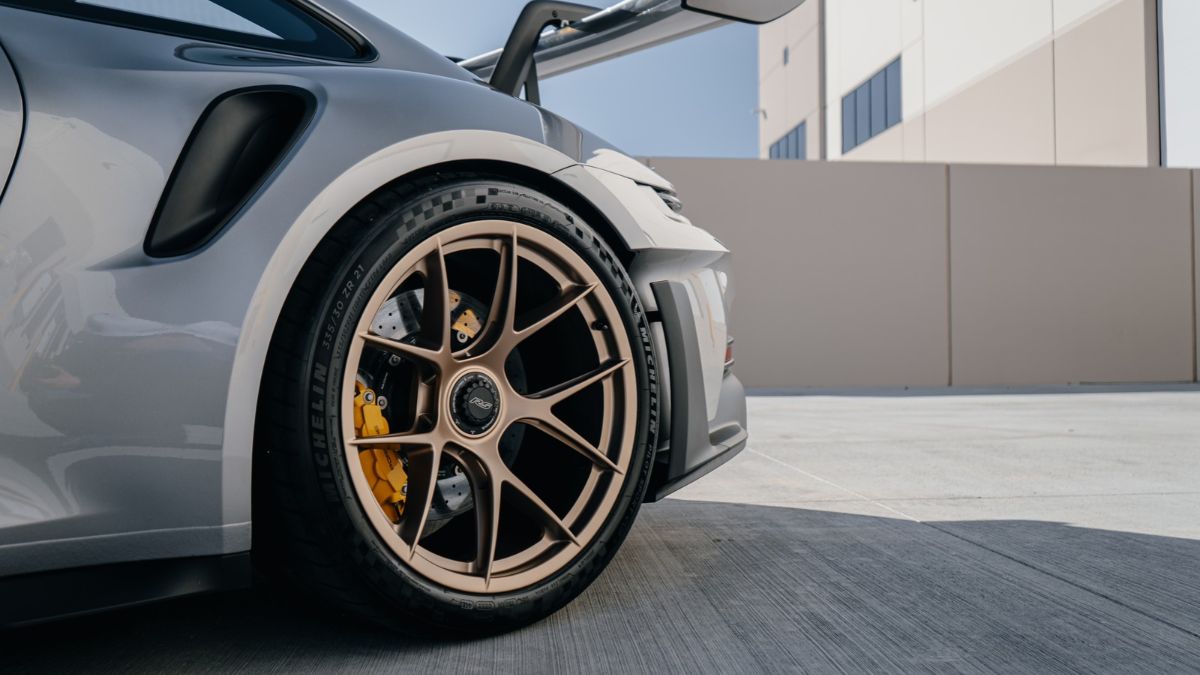
These finishes may respond differently to cleaning products and environmental exposure. Some can be particularly sensitive to acidic chemicals, abrasive brushes, or improper maintenance techniques.
Select protective treatments based on the wheel’s actual finish, not on assumptions about what every alloy or aftermarket wheel needs.
Coating compatibility matters because a treatment designed for one surface may not suit another. Preserving the existing finish is especially important for custom wheels with specialized coatings or decorative details.
Cleaning Frequency for Daily Drivers
The ideal wheel cleaning schedule depends on how quickly brake dust accumulates. A vehicle used for short trips in heavy traffic may require more frequent attention than one driven primarily on open highways.
Wheel color also affects how noticeable the buildup becomes. Dark wheels may conceal some residue, while bright silver or white wheels can appear dirty after relatively little accumulation.
Cleaning wheels regularly before brake dust becomes heavily bonded is generally easier than removing months of accumulated residue.
Drivers can adjust their maintenance routine based on visible buildup and the condition of the wheel finish. Consistency is more important than following a single cleaning interval for every vehicle.
Wheel Protection During Hot Weather
Hot weather creates additional challenges for vehicle maintenance. In Las Vegas, exposed wheel surfaces can get very warm when a vehicle is parked outside, especially after driving.
High surface temperatures can cause water and cleaning products to evaporate quickly. This may leave deposits or residue if you don’t use products as directed.
Cleaning wheels when they are cool and out of direct sunlight can help prevent cleaning solutions from drying prematurely on the surface.
Protective coatings can help simplify routine maintenance, but they do not eliminate the effects of heat or environmental exposure. Proper washing practices remain important regardless of the protective treatment used.
The Difference Between Wheel Ceramic Coating and Paint Ceramic Coating
Automotive ceramic coatings are available for different surfaces, including paint, wheels, glass, and interior materials. Although these products may share certain water-repellent characteristics, their formulations and intended applications can differ.
Wheel-specific coatings are designed with the operating conditions around wheels in mind. These areas encounter brake dust, road grime, and repeated temperature changes that differ from the exposure many painted body panels experience.
Wheel ceramic coatings are formulated for the demands of wheel surfaces, while paint coatings primarily protect and enhance automotive paint finishes.
For comparison, ceramic paint coatings focus on gloss, hydrophobicity, and resistance to environmental contamination. Always confirm product suitability before applying a coating to a different surface.
Wheel Ceramic Coating and Long-Term Maintenance
A ceramic-coated wheel still needs regular washing to remove brake dust and road contaminants. The coating may make this process easier, but letting deposits remain indefinitely can affect appearance and performance.
Harsh chemicals, abrasive cleaning methods, and repeated environmental exposure may gradually reduce the coating’s effectiveness. The expected lifespan depends on the product, application, driving conditions, and maintenance routine.
Consistent maintenance helps preserve a ceramic-coated wheel’s water-repellent properties and appearance throughout its service life.
Also follow any initial curing instructions after applying the coating. Washing too soon or exposing a newly applied product to unsuitable conditions may affect the result.
Recognizing the Difference Between Brake Dust and Road Grime
Not every dark deposit on a wheel comes from the braking system. Road grime can include tire residue, dirt, oils, and other contaminants collected while driving.
These substances can combine with brake dust, creating a layer that is harder to remove than either material alone. The mixture may collect along the inner barrel, behind spokes, and around the wheel’s outer edge.
Identifying the type of contamination helps you choose the safest cleaning approach and avoid unnecessarily aggressive chemicals.
Some bonded deposits may require specialized products, but choose them based on the wheel’s finish. When the cause of a stain is unclear, aggressive scrubbing can make the problem worse.
Protecting More Than Just the Wheels
Brake dust is only one of several contaminants that affect a vehicle’s appearance. Road grime, water deposits, airborne dust, and environmental residue can also collect on painted surfaces and exterior glass.
Different surfaces benefit from different protective treatments. For example, ceramic glass coating helps repel water and makes certain contaminants easier to remove from exterior glass.
Matching protective coatings to their intended surfaces helps maintain a vehicle’s appearance without relying on one product for every material.
Wheel protection is worth considering separately because braking creates a recurring source of contamination close to the surface. Understanding this difference can help vehicle owners plan a more practical maintenance routine.